
Introduction (H2)
Air fryers have revolutionized home cooking by making it easy to prepare crispy, delicious meals with minimal oil. But how exactly does an air fryer achieve this? Understanding the principle behind air fryers not only satisfies curiosity but also helps you maximize their performance for perfect cooking results.
The Basic Principle of an Air Fryer (H2)
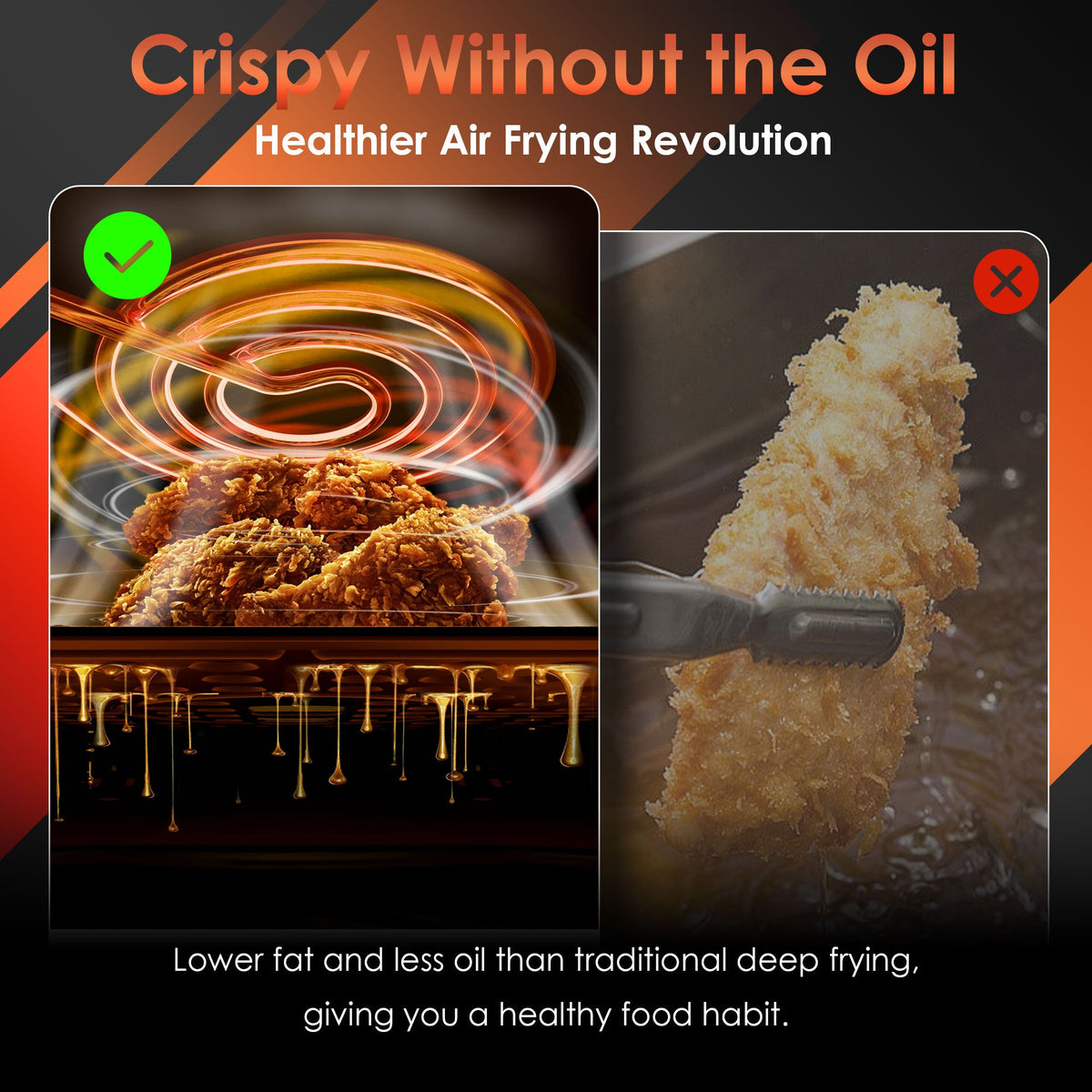
An air fryer is essentially a small, high-speed convection oven. It uses rapid hot air circulation to cook food evenly, creating a crispy exterior while keeping the inside moist. The core principle combines three main elements:
-
Hot Air Circulation
-
A powerful fan circulates hot air around the food at high speed.
-
This ensures uniform heat distribution and faster cooking than a traditional oven.
-
-
High Heat (Conduction and Convection)
-
The heating element (usually at the top) generates temperatures between 150°C–200°C (300°F–400°F).
-
Heat is transferred to the food through convection (moving hot air) and radiation from the element.
-
-
Maillard Reaction
-
The rapid circulation and high temperature cause the Maillard reaction, a chemical reaction between amino acids and sugars.
-
This reaction produces a golden-brown, crispy texture and enhances flavor—similar to deep-frying but with much less oil.
-
Why Air Fryers Require Minimal Oil (H3)
-
The circulating hot air transfers heat efficiently, which allows surface moisture to evaporate quickly, forming a crispy layer.
-
A small amount of oil helps accelerate browning and adds flavor, but the process does not rely on submerging food in oil like traditional frying.
Additional Features That Improve Cooking (H2)
-
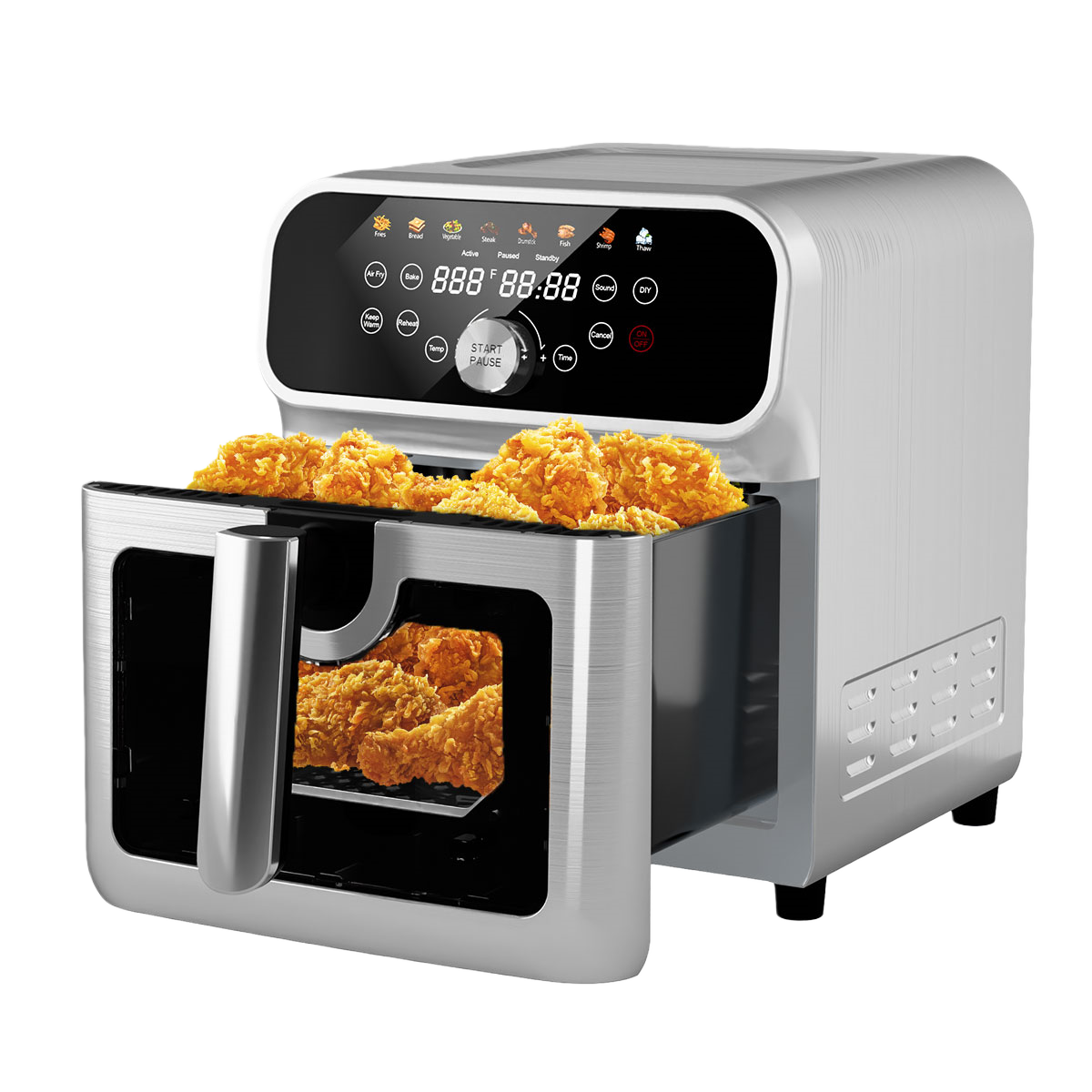
Temperature Control – Allows precise cooking for different foods.
-
Timers and Presets – Simplify cooking by adjusting time and heat automatically.
-
Air Fryer Basket Design – Perforated baskets ensure maximum airflow around the food for even crispiness.
Tips to Make the Most of an Air Fryer (H2)
-
Do not overcrowd the basket: Proper air circulation is key for crispiness.
-
Pat food dry before cooking: Reduces moisture for better browning.
-
Use minimal oil: A thin coating is enough for Maillard browning.
-
Shake or flip food halfway: Ensures even cooking for items like fries or vegetables.
Conclusion (H2)
An air fryer works by combining rapid hot air circulation, high heat, and the Maillard reaction to create crispy, flavorful dishes with little oil. Understanding the principle behind it can help you cook smarter, healthier, and more efficiently. Whether you’re making fries, chicken, or vegetables, the air fryer’s science ensures fast and satisfying results every time.

Leave a comment
This site is protected by hCaptcha and the hCaptcha Privacy Policy and Terms of Service apply.